
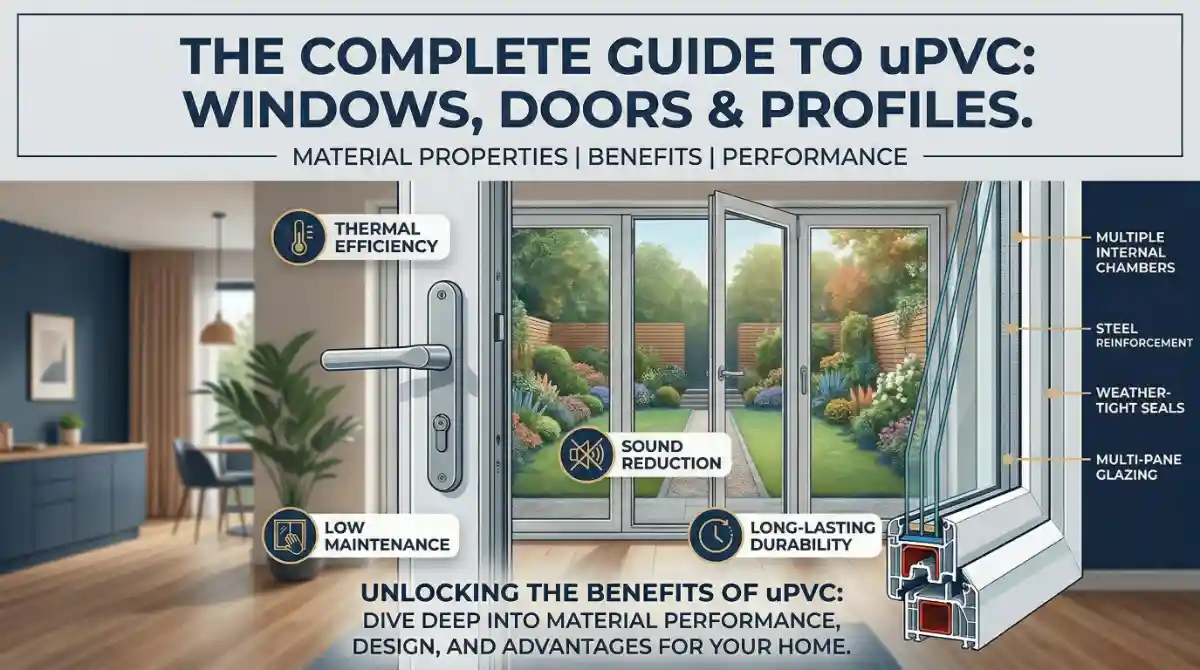

uPVC has become one of the most widely used materials in modern construction, especially for windows and doors. If you are building a new home or upgrading existing windows, you’ve probably come across the term uPVC.
But what exactly is uPVC, and why is it so popular?
This guide explains everything you need to know about uPVC, including how it is used in windows and doors, its advantages, and why it is considered a practical choice for homes and commercial buildings in India.
What is uPVC
uPVC stands for unplasticized polyvinyl chloride, a type of rigid plastic material widely used in construction. Unlike regular PVC, uPVC does not contain plasticizers, making it stronger, more durable and suitable for structural applications.
Because of its strength and resistance to environmental conditions, uPVC is commonly used for:
- windows
- doors
- pipes
- building materials
In the context of homes and buildings, uPVC is mainly used for window and door frames.
How uPVC is Used in Windows and Doors
uPVC is used to create strong frames that hold glass panels and hardware components. These frames are designed to provide stability, insulation and long-term performance.
A typical uPVC window or door system includes:
- uPVC frame
- glass panel
- hardware (locks, handles, hinges)
- sealing components
These elements work together to provide functionality, security and durability.
What Are uPVC Profiles
uPVC profiles are the structural sections used to manufacture window and door frames. They are designed with internal chambers that improve strength and insulation.
These profiles are:
- lightweight yet strong
- resistant to environmental damage
- designed for long-term use
The quality of uPVC profiles plays a major role in the overall performance of windows and doors.
What Are uPVC Windows?
uPVC windows are made using reinforced uPVC frames combined with glass panels. They are designed to provide insulation, durability, and smooth operation.
Common Types of uPVC Windows
- Sliding Windows
- Casement Windows (Single & Double)
- Top Hung Windows
- Fixed Windows
- Ventilators
- Partiton and Cabin Works
Each type is designed for specific applications like ventilation, space-saving, or aesthetics.
What Are uPVC Doors?
uPVC doors are strong, weather-resistant door systems used in homes and commercial spaces. They are available in multiple designs depending on the requirement.
Common Types of uPVC Doors
They are widely used for balconies, rooms, offices, and commercial interiors.
Key Features of uPVC Material
uPVC has several properties that make it suitable for construction.
High Durability
uPVC is resistant to corrosion, moisture and environmental damage, making it suitable for long-term use.
Weather Resistance
It performs well in different weather conditions, including heat, rain and humidity.
Low Maintenance
uPVC does not require painting or polishing, making it easy to maintain.
Thermal Insulation
It helps reduce heat transfer, improving indoor comfort.
Noise Reduction
When combined with proper sealing, uPVC windows help reduce external noise.
Advantages of uPVC Windows and Doors
Energy Efficiency
uPVC frames provide better insulation, helping maintain indoor temperature and reduce energy consumption.
Long Lifespan
They are designed to last for many years without significant wear or damage.
Resistance to Moisture
Unlike wood, uPVC does not absorb water or swell.
Termite and Corrosion Resistance
uPVC is not affected by termites or rust, making it a reliable choice.
Easy Cleaning
Regular cleaning with a cloth is usually enough to maintain appearance.
Why uPVC is Ideal for Indian Climate
India has diverse climate conditions, including:
- High temperatures (Telangana)
- Humidity and coastal air (Andhra Pradesh)
uPVC performs well in both conditions:
In Telangana
- Reduces heat entry
- Maintains indoor comfort
- Prevents dust infiltration
In Andhra Pradesh
Prevents water leakage
Resists moisture and corrosion
Performs well in coastal environments
uPVC vs Traditional Materials
| Feature | uPVC | Wood | Aluminium |
|---|---|---|---|
| Maintenance | Low | High | Medium |
| Durability | High | Moderate | High |
| Insulation | High | Moderate | Low |
| Moisture Resistance | Excellent | Low | Moderate |
| Cost Efficiency | Better long-term | Expensive | Moderate |
uPVC offers a balanced combination of performance, durability and cost efficiency.
Applications of uPVC
uPVC is widely used in:
- residential homes
- apartments
- villas
- office buildings
- commercial spaces
- interior partitions
Its versatility makes it suitable for different types of construction projects.
Why uPVC is Ideal for Indian Climate
India has diverse weather conditions, including heat, dust, humidity and heavy rainfall.
uPVC performs well because:
- it does not absorb heat easily
- it resists moisture and humidity
- it prevents dust entry with tight sealing
- it does not corrode
This makes uPVC windows and doors ideal for regions like Telangana and Andhra Pradesh.
Common Myths About uPVC
uPVC is not strong
In reality, uPVC is a strong and durable material used in structural applications.
uPVC changes color easily
High-quality uPVC is designed to resist UV rays and maintain its appearance.
uPVC is only for modern homes
It can be used in both modern and traditional designs.
How to Choose Quality uPVC Windows and Doors
When selecting uPVC systems, consider:
- quality of profiles
- hardware components
- installation process
- customization options
Choosing a reliable manufacturer ensures better performance and durability.
Conclusion
uPVC has become a preferred material for windows and doors due to its durability, low maintenance and performance in different climates. It offers a practical solution for homeowners and builders looking for long-lasting and efficient window systems.
Whether you are constructing a new home or upgrading existing windows, uPVC provides a reliable and modern option.
Frequently Asked Questions
Looking for the Right Windows for Your Home?
Contact us today to get expert guidance.